
Perspective
In memory of David Hockney, and the case for humanity as the moat around the machines.

On June 11, 2026, we lost a giant.
David Hockney died at his home in London at 88, working from his wheelchair until the very end. The phrase his team chose to send into a grieving world was two words.
“Love life.”
That was his perspective. His practice. And it is what I want to write about today, because perspective was the gift he gave everyone who stood in front of his work, rode in his car, or simply learned to look harder because he insisted it was worth it.
I first felt what that meant in my early twenties, working at Rebo High Definition Studios in Chelsea, New York, back before the galleries moved in. It was gritty, alive in a rougher way. Barry Rebo ran one of the most avant garde visual operations in the country, and Laurie Anderson and other artists were making work in those studios. I had just gotten out of college and I was the youngest member of the American Electronics Association’s HDTV task force, lobbying Congress on technology standards.
We were also working with Sony’s first generation HDTV professional equipment, trying to find new ways for artists to express how this new technology could help artists and storytellers make new things never before seen.
The Japanese had built the first round of HDTV cameras with resolution that looked like film. Like looking through a Kodachrome slide. When the engineers brought those cameras to a broadcast show, they aimed them at flowers to show off the resolution.
We had other ideas.
We put this in the hands of the world’s greatest artists. Zbigniew Rybczynski made a short film set to John Lennon’s Imagine, with Yoko Ono’s permission, and we won a Palme d’Or at Cannes. Then we brought one of Sony’s frame stores to David Hockney’s studio in Malibu. He said yes!
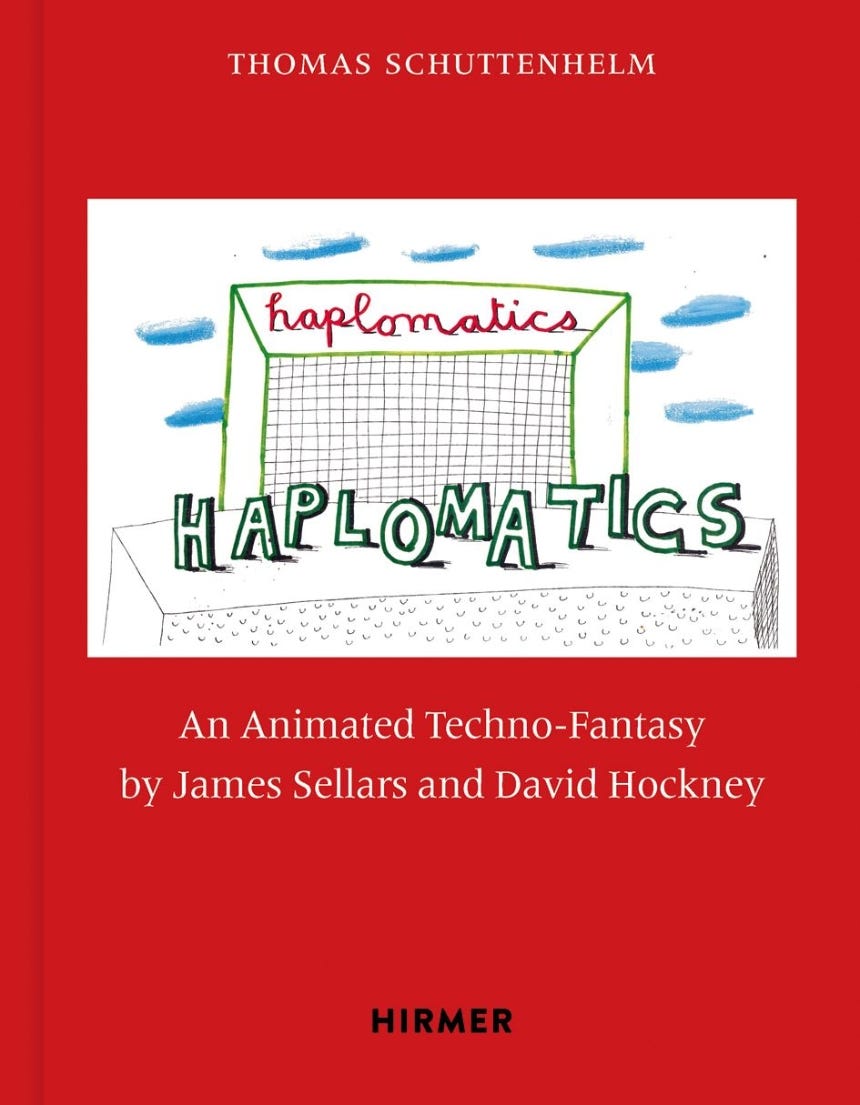
What came out of it was Haplomatics, a collaboration with musicologist and composer James Sellars, of blessed memory, on a film about a genus of abstract beings called Haplomes, brought to life through Hockney’s prints and Sellars’s narration and score. David used the early Sony HDTV paint box to build many of the images as composites, layering and combining sources in a way no one had done before. I have several of those unsigned prints hanging in my home right now. The project was never officially finished. After James died, he left his diaries to the music college where he had taught. Decades passed. A PhD researcher named Thomas Schuttenhelm found those diaries, read them closely, and pieced the project back together. The Hockney estate agreed to let a show happen. It opened at the New Britain Museum of American Art in December 2024 and ran for most of a year, the thirty five prints displayed alongside the film for its first public debut. David could no longer travel, but he approved it.
Before we got to work all those years ago, David took me for a ride.
Top down. Mulholland Drive. Opera blasting so loud it stopped being sound and became something physical, something you felt moving through your chest.
David Hockney was going deaf. So he turned it up.
He drove those curves with the music moving through him, not just looking at the canyon and the light but inside them. I sat beside him trying to see what he saw, knowing I never fully would. I could be drawn to color the way he was. I could not draw it the way he did. He had a gift that was entirely his own.
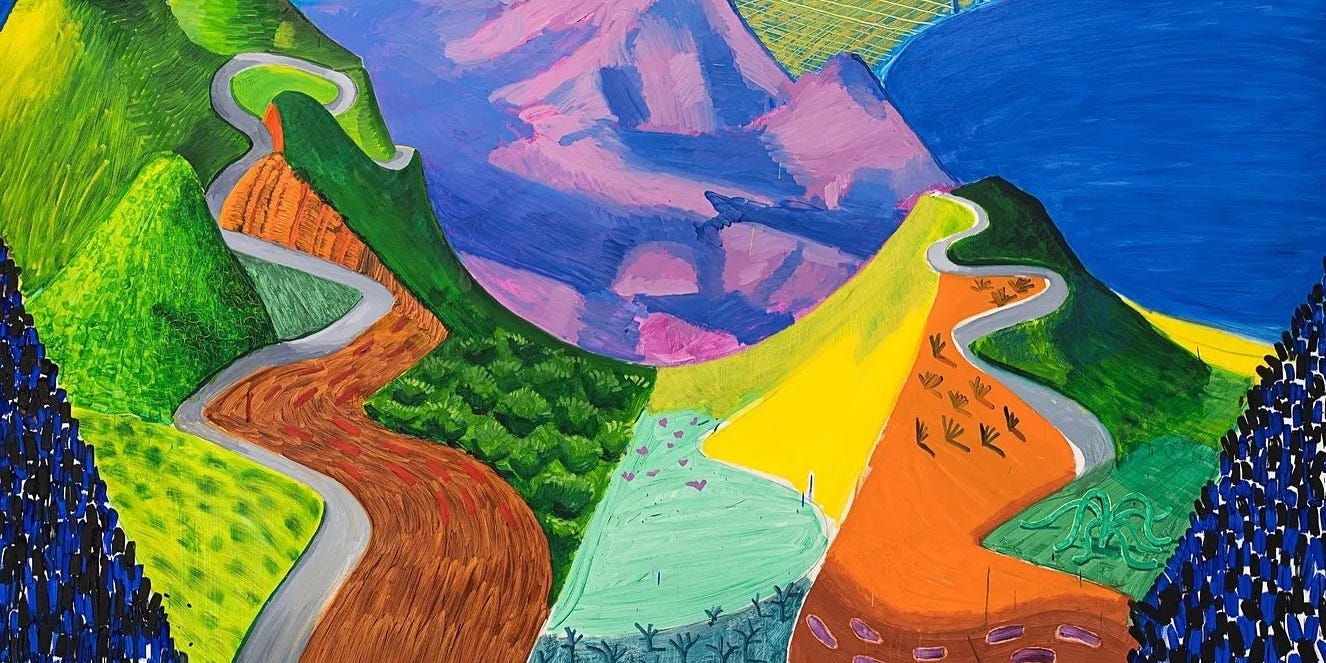
He had famous paintings of that same drive. When you have seen those paintings and then sit in that car, you understand that what he put on canvas was not what the drive looked like. It was what the drive felt like to him.
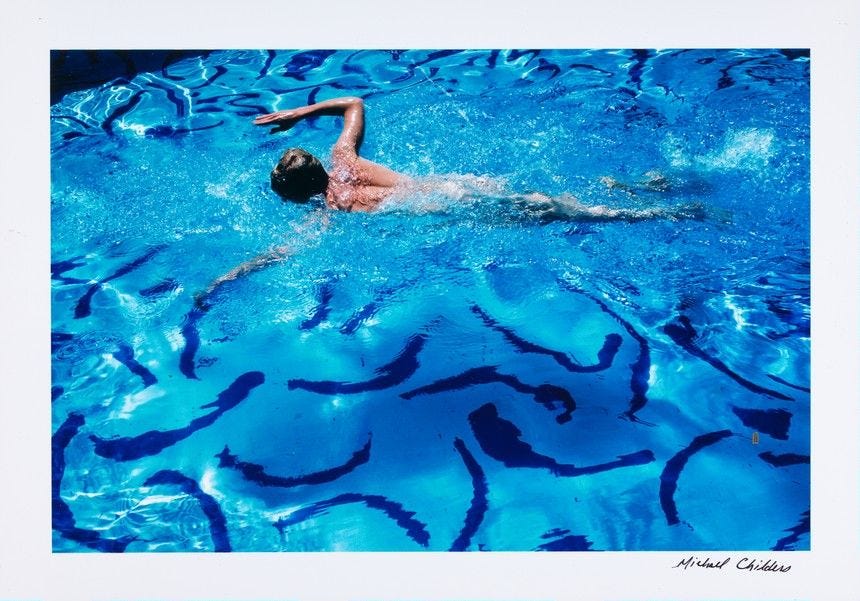
Famed photographer Michael Childers gave my sister Lisa one of his iconic photos for me for my birthday last year. Lisa and Michael are friends, and she had told him about my three decade long love of David and his work. Michael was David's friend and photographer for more than forty years. In the photo David is young, newly arrived in Los Angeles, swimming naked in a pool he would later make famous. He had left gray, rationed England behind and found flat color, hard light, sharp architecture, and a freedom he had never had before. He used to say the pools were never really about swimming. They were about everything California gave him that Yorkshire never could.
In the limited time I spent with him I knew I was in the presence of something rare. He could move people with images the way most people cannot move them with words.
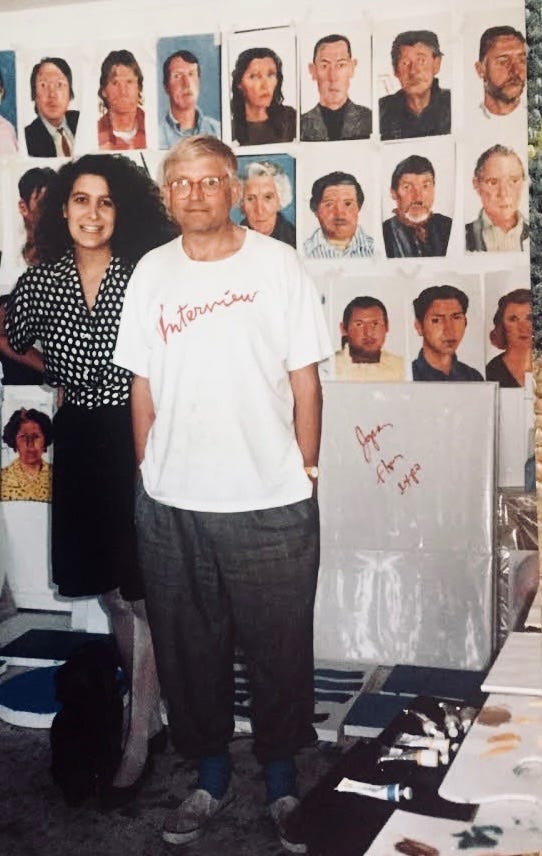
In his studio the walls were covered, floor to ceiling, with portraits. Friends. People he loved enough to paint and pin up around him while he worked, so when he looked up he saw the faces of the people who mattered to him. I stood in that room once, surrounded by those faces.
Years after Malibu, once the iPad existed and could do in his pocket what the old Sony frame store could only gesture at, David drew a flower every morning and sent it to his friends, so they would have fresh blooms to start the day.
A machine can generate a swimming pool. It was never in the water. It has no friends to paint, no wall to cover, nobody it sends flowers to before breakfast.
Humans take what they see and give it to someone else. David gave the work away, again and again, for most of his life.
Take the high road. It always delivers a better view, because altitude changes what you are able to see. We train our own brains with our perspectives. If you always look for the worst case, you will find it. The reframe is choosing your altitude, every day, on purpose.
David Hockney did this his entire life. Going deaf, he turned the music up. During the pandemic he drew spring arriving in Normandy on his iPad and sent the paintings to his friends. “They cannot cancel spring”, he said.
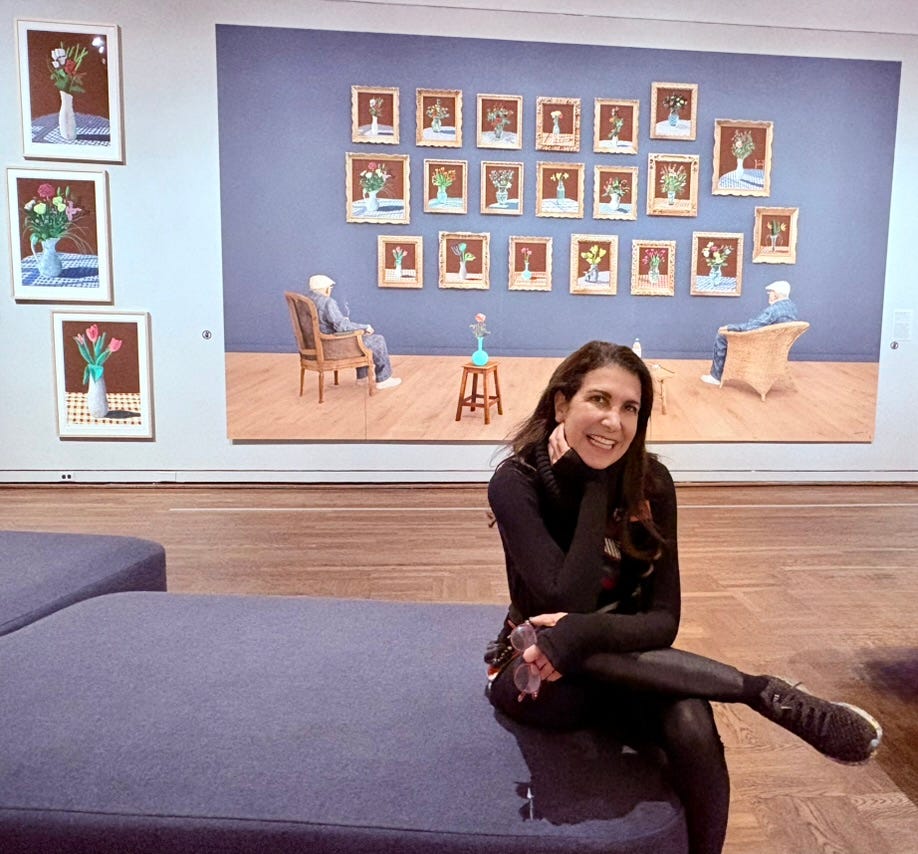
Last summer, after I missed his Fondation Louis Vuitton retrospective in Paris and the Haplomatics show in Connecticut, my partner Steven made me a promise. No matter what, we would go to Portland to see Hockney’s show there. He made it happen. Standing inside that show, the largest North American survey of his work, more than 200 pieces across six decades, I felt something like being in his company again. Thirty years after Mulholland Drive. At the end of the show was a room filled with iPads. Strangers were drawing, using prompts David and the curators designed so anyone could try to see the way he saw.
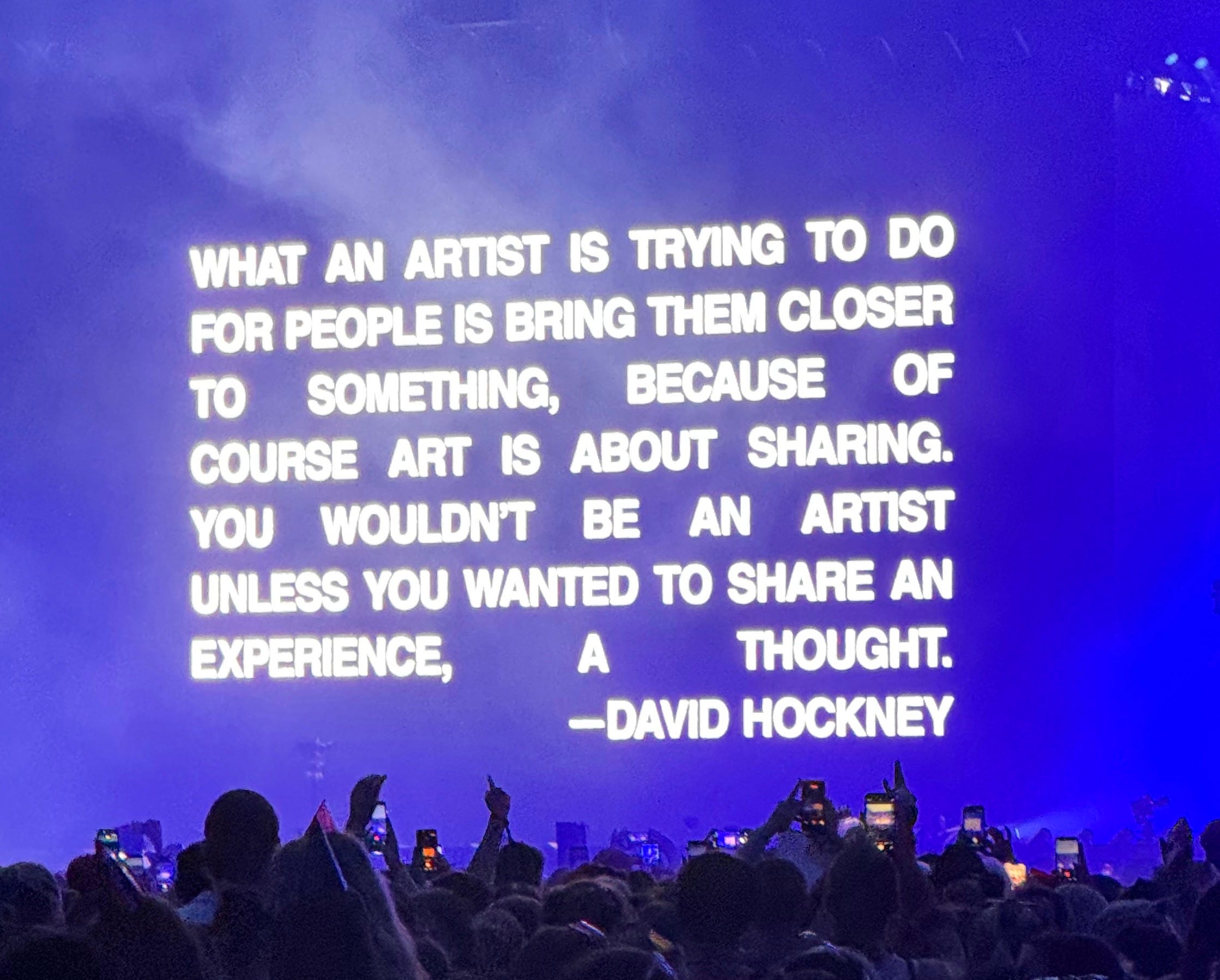
A few nights ago my friend Liz texted me a photo from Wembley Stadium. Harry Styles was performing to 90,000 people and David’s words filled the screen behind him. “What an artist is trying to do for people is bring them closer to something, because of course art is about sharing. You wouldn’t be an artist unless you wanted to share an experience, a thought.” Ninety thousand people read those words the night after we lost him.
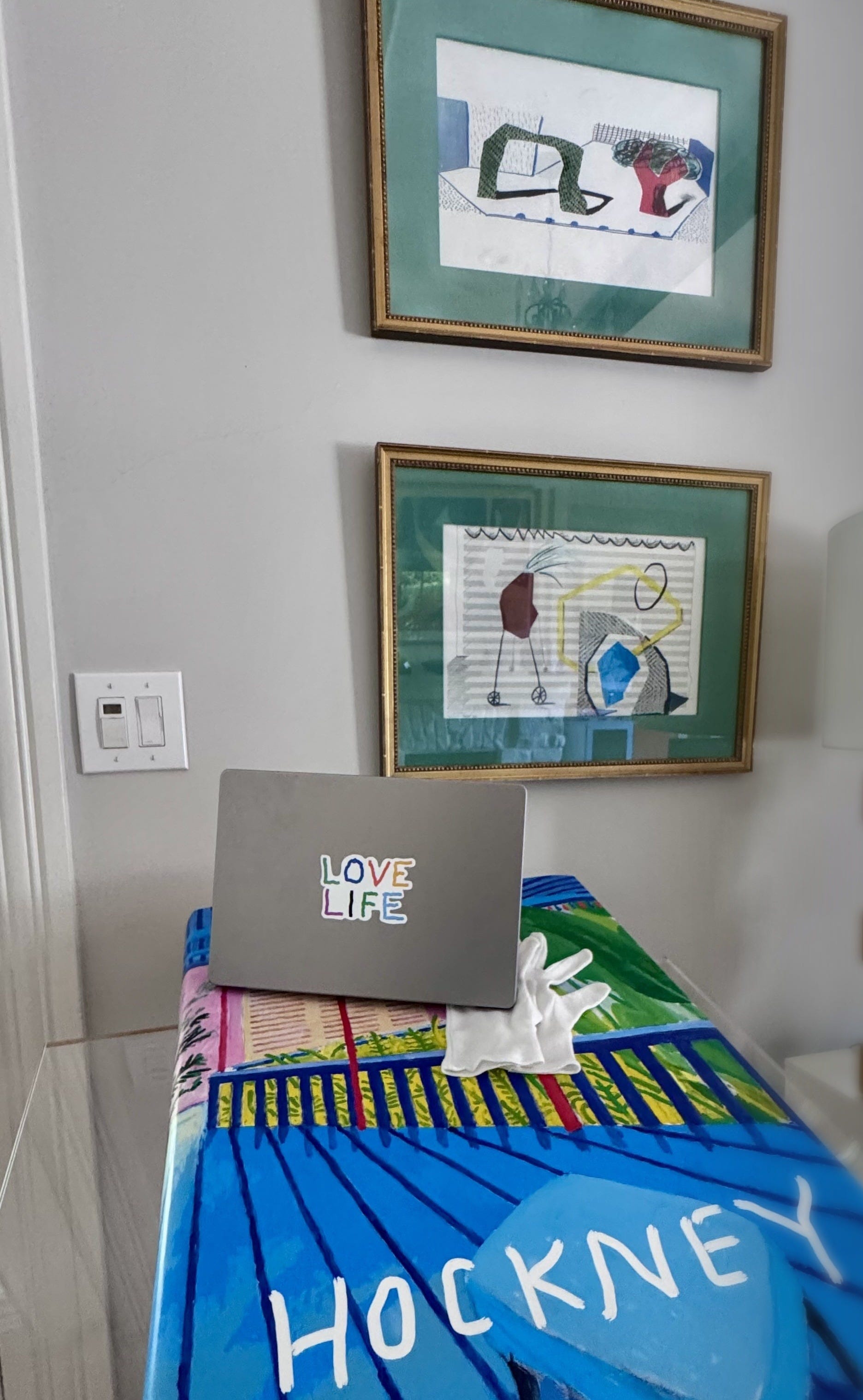
“Love life.”
I put that sticker Hockney created on my laptop turned upside down. Not facing me, facing out, so anyone across the table sees it before they see anything else about me. A bumper sticker, except in front. I bought it at Lightroom in London where I took the video below. It was a magnificent immersive show David designed himself over three years, narrated in his own voice. Checkout the Lightroom trailer here.
I will never have David’s hands or his eyes. But I share his philosophy and I practice it through a different instrument. Leadership. Helping people use machines as what they actually are, enablers, amplifiers, new ways to tell the story, never replacements for what makes us human in the first place.
What do you see? Where are you choosing to stand? Those are questions I ask the leaders I work with, the same questions I am still asking myself.
Humanity is the moat around the machines. We keep choosing where to look from, who to look at, and what to give away once we have seen it. Soul cannot be simulated. Wisdom is earned, never downloaded. Love is a practice, not a feeling. Choosing it over fear is a decision your brain can make, not a mood that happens to you. Perspective is the same kind of fortification. You build it, you choose it, you turn it around and offer it to the next person at the table.
David drove that canyon road his way, opera blasting, deaf and undeterred, painting what it felt like rather than what it looked like. I drive it my way too, choosing the high road because it has never once failed to deliver a better view.
“Love life”, he said.
I am still passing it forward.
Sparks with Soul is my place to explore what’s emerging across culture, business, technology, and humanity and what it means to stay human inside all that change. I write it as a labor of curiosity and care. Sharing is caring, so if something here sparks for you, please re-stack, comment, and or share it with people in your world who could use a few sparks. You can learn more about my work, speaking, and projects at my website.
xo, Tina
Thanks for reading. This post is public so feel free to share and subscribe.
Love this!
Beautiful Tina